The Random Walk Blog

2025-03-21

Matplotlib vs. Plotly: Choosing the Right Data Visualization Tool

Matplotlib vs. Plotly: Choosing the Right Data Visualization Tool

In a data-driven world, effective visualization is essential for analyzing complex datasets. Well-crafted visuals simplify intricate information, enhance storytelling, and make insights more accessible. Among the many tools available, Matplotlib and Plotly stand out as two of the most widely used Python libraries for data visualization. Each offers distinct features catering to different user needs. Let's explore their strengths, differences, and ideal use cases.

Getting Started: Understanding the Basics

Matplotlib: The Classic Powerhouse

If you're coming from a scientific computing background, Matplotlib will feel familiar. As the foundation of Python visualization, it offers granular control over plots, making it ideal for research papers and static reports. With a few lines of code, you can create line charts, bar graphs, and scatter plots with precision. While it lacks built-in interactivity, its reliability and extensive customization options make it a go-to for academia and engineering.
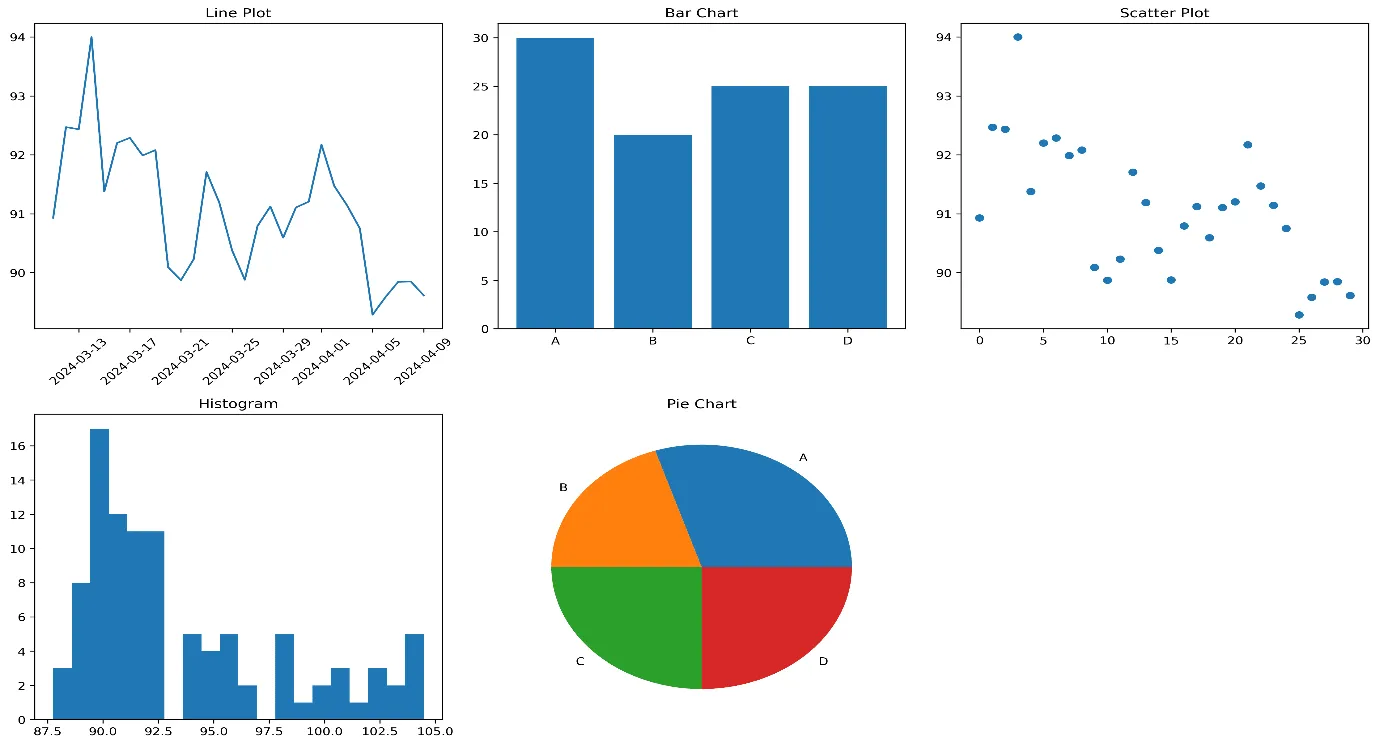
Matplotlib - charts.webp

Plotly: The Interactive Game-Changer

Plotly brings data visualization into the interactive age. It generates the same charts, scatter plots, and bar graphs as Matplotlib, but with added interactivity—hover over any data point, and tooltips, zooming, and dynamic updates happen effortlessly. With zero additional code, you get sleek, responsive visuals perfect for web-based applications and dashboards.
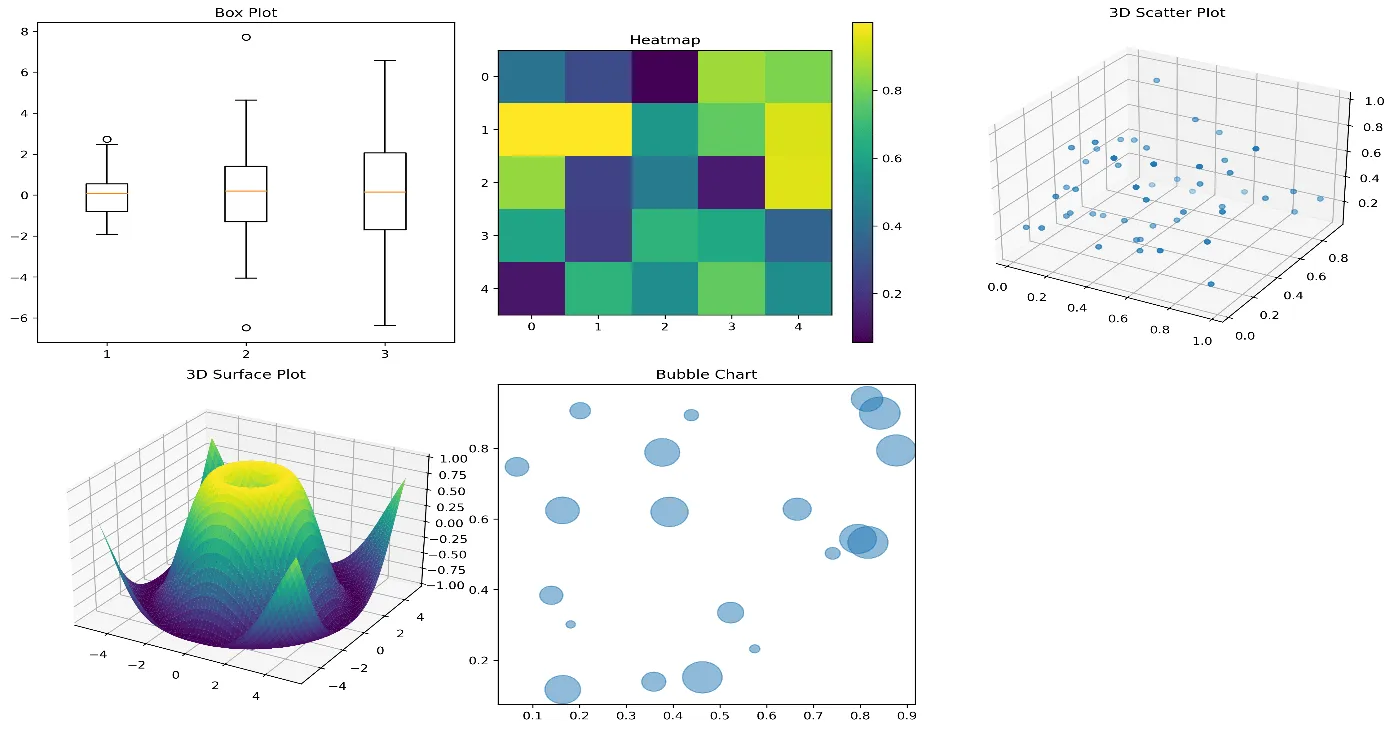
Plotly graphs.webp

Advanced Visualization Techniques

Matplotlib: Deep Customization and Flexibility

For users who demand absolute control, Matplotlib excels in advanced customizations. Whether you need to create multi-panel dashboards with shared axes or fine-tune histogram bins, Matplotlib offers unmatched versatility. Think of it as an artist’s toolkit—everything is at your disposal, but mastering it takes effort.

Plotly: Built for Modern Interactive Experiences

Need a 3D plot that users can explore? Or interactive subplots where selecting data in one graph updates another? Plotly handles these features natively. It's a top choice for real-time animations and web-friendly dashboards, making it indispensable for industries that rely on live data visualization, such as finance and tech.

Matplotlib vs. Plotly: A Feature Comparison
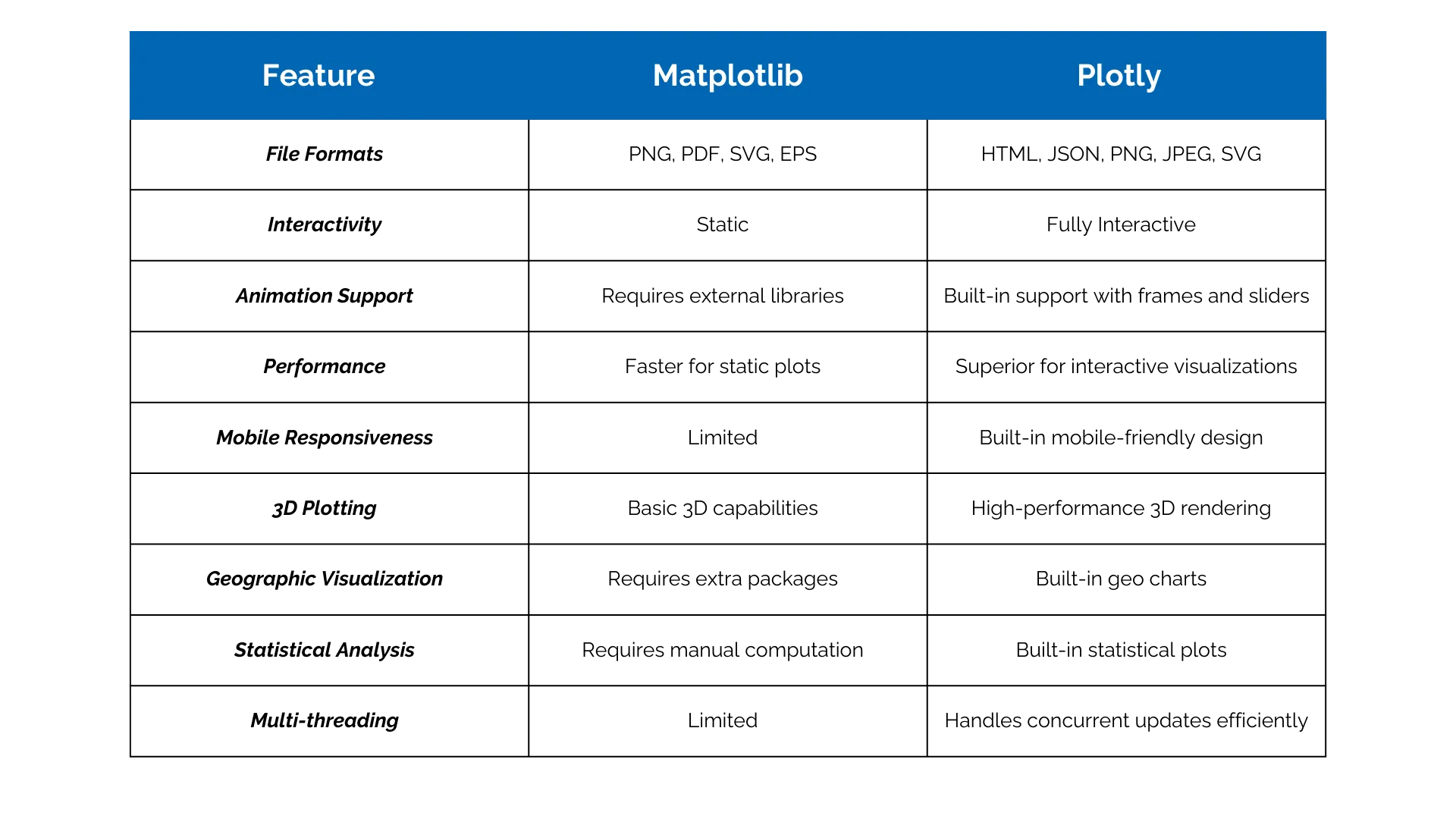
Matplotlib vs plotly Table.webp

Choosing the Right Library: Key Considerations

Industry-Specific Recommendations

  • Finance & Trading: Plotly is the winner for real-time market analysis and interactive dashboards.

  • Academic Research: Matplotlib remains the best for scientific publishing.

  • Healthcare & Medical Imaging: Matplotlib provides better control over color mapping and precision.

  • Tech Startups: Plotly’s modern stack makes it ideal for MVPs and rapid prototyping.

Project Scale Considerations

  • Small Teams (1-5 people): Start with Matplotlib for easy maintenance.

  • Medium Teams (5-20 people): Plotly offers better collaboration features.

  • Enterprise-Level Projects: Use both—Matplotlib for data pipelines, Plotly for front-end visualization.

Budget Considerations

  • Matplotlib: Completely free and open-source.

  • Plotly: Free for most applications, but enterprise features require licensing.

Final Verdict: Which One Should You Choose?

For individual data scientists and researchers, Matplotlib remains the preferred choice for static, publication-quality plots. However, for teams building interactive, web-based applications, Plotly offers better usability, interactivity, and web integration.

Best Approach? Use Both!

  • Matplotlib for data analysis and processing.

  • Plotly for presenting insights in interactive formats.
Related Blogs

The Next Bumrah Is Already in Your Database

In 2025, a 14-year-old named Vaibhav Suryavanshi walked out in the IPL and hit the fastest century the tournament had ever seen from an Indian, and one of the fastest from anyone. By the next morning every broadcast was asking the same thing: where did this kid come from?

The Next Bumrah Is Already in Your Database

Scroll, Swipe, Decide, Move On: How Information Is Consumed Today

A decade ago, people searched for information. Today, information searches for people. It appears in notifications, reels, swipe cards, AI summaries, YouTube Shorts, carousel posts, and algorithmic feeds. The modern user no longer “reads through” information. They scan, evaluate, react, and move on - often within seconds.

Scroll, Swipe, Decide, Move On: How Information Is Consumed Today

Winning Customers Without Marketing Spend

There’s a certain kind of freedom that comes with not spending on ads. No dashboards to obsess over. No rising Customer Acquisition Cost [CAC] to worry about. No panic when performance dips overnight. But more importantly, there’s something else you gain - something most teams miss when they rely on paid acquisition.

Winning Customers Without Marketing Spend

Seeing the Full Picture — Product Analytics and Error Monitoring in Practice

Building a product means making hundreds of decisions every week. Which feature to prioritize. Which page to simplify. Which flow is confusing users. Most teams make these decisions based on gut feeling and assumptions.

Seeing the Full Picture — Product Analytics and Error Monitoring in Practice

How AI Agents Improve Customer Support and Website Conversions

A few years ago, most company websites were static. Visitors would browse pages, maybe fill out a contact form, and wait for a response. Today that expectation has completely changed. When someone lands on your website, they expect the same responsiveness they get from messaging apps - quick answers, instant clarification, and sometimes even guidance while making decisions.

How AI Agents Improve Customer Support and Website Conversions
The Next Bumrah Is Already in Your Database

The Next Bumrah Is Already in Your Database

In 2025, a 14-year-old named Vaibhav Suryavanshi walked out in the IPL and hit the fastest century the tournament had ever seen from an Indian, and one of the fastest from anyone. By the next morning every broadcast was asking the same thing: where did this kid come from?

Scroll, Swipe, Decide, Move On: How Information Is Consumed Today

Scroll, Swipe, Decide, Move On: How Information Is Consumed Today

A decade ago, people searched for information. Today, information searches for people. It appears in notifications, reels, swipe cards, AI summaries, YouTube Shorts, carousel posts, and algorithmic feeds. The modern user no longer “reads through” information. They scan, evaluate, react, and move on - often within seconds.

Winning Customers Without Marketing Spend

Winning Customers Without Marketing Spend

There’s a certain kind of freedom that comes with not spending on ads. No dashboards to obsess over. No rising Customer Acquisition Cost [CAC] to worry about. No panic when performance dips overnight. But more importantly, there’s something else you gain - something most teams miss when they rely on paid acquisition.

Seeing the Full Picture — Product Analytics and Error Monitoring in Practice

Seeing the Full Picture — Product Analytics and Error Monitoring in Practice

Building a product means making hundreds of decisions every week. Which feature to prioritize. Which page to simplify. Which flow is confusing users. Most teams make these decisions based on gut feeling and assumptions.

How AI Agents Improve Customer Support and Website Conversions

How AI Agents Improve Customer Support and Website Conversions

A few years ago, most company websites were static. Visitors would browse pages, maybe fill out a contact form, and wait for a response. Today that expectation has completely changed. When someone lands on your website, they expect the same responsiveness they get from messaging apps - quick answers, instant clarification, and sometimes even guidance while making decisions.

Additional

Ready to Transform Your Enterprise?

Join leading organizations that trust Randomwalk.ai to power their AI-driven transformation.